

If you want to live in a historical area of Pasadena, consider buying a condo at Castle Green or renting an apartment at the newly built ‘The Raymond Renaissance.’
History of Raymond Ave in Pasadena
In the late 1800s, Pasadena was a small town transformed by the arrival of the Santa Fe Railroad. A savvy businessman, Walter Raymond saw the potential for a grand hotel to attract wealthy Easterners looking to escape the cold winter months. In 1883, he hired architect J.H. Littlefield to build a luxurious hotel atop a hill in South Pasadena. He called it the ‘Raymond Hotel’.
The four-story Raymond Hotel was beautiful, with its distinctive sloping roof and grand Victorian veranda. The hotel boasted 200 guest rooms and 55 acres of grounds, offering guests a stunning panoramic view of the surrounding area. The Raymond quickly became a popular hotel, attracting many wealthy guests.
What happened to Pasadena’s Raymond Hotel?
On Easter Sunday in 1895, the all-wood Raymond Hotel burned to the ground. The Raymond Hotel was rebuilt and reopened in 1901, even more lavish than before. Pasadena’s new hotel featured a tunnel built into the hillside that delivered guests directly from the train station to the hotel via an underground elevator.
The Raymond Hotel was the place to stay for three decades until the Great Depression hit, dealing a serious blow to business. Raymond’s family moved into the caretaker’s quarters (the current restaurant), and the hotel closed its doors.
The Raymond Hotel’s remains are a historical marker and a few scattered ruins. However, the hotel’s legacy lives on, and its impact on Pasadena’s history is everlasting. Raymond Avenue, a major street through Downtown Pasadena, nods to the Raymond family.
Pasadena’s Raymond Avenue
Raymond Avenue, named for the Raymond Hotel and its owner, Walter Raymond, was the site of three of Pasadena’s grand hotels: the Raymond, the Green, and the Painter. The Green Hotel, built in 1893, has been partially preserved and now houses several residential units.
The Hotel Green on Raymond Ave
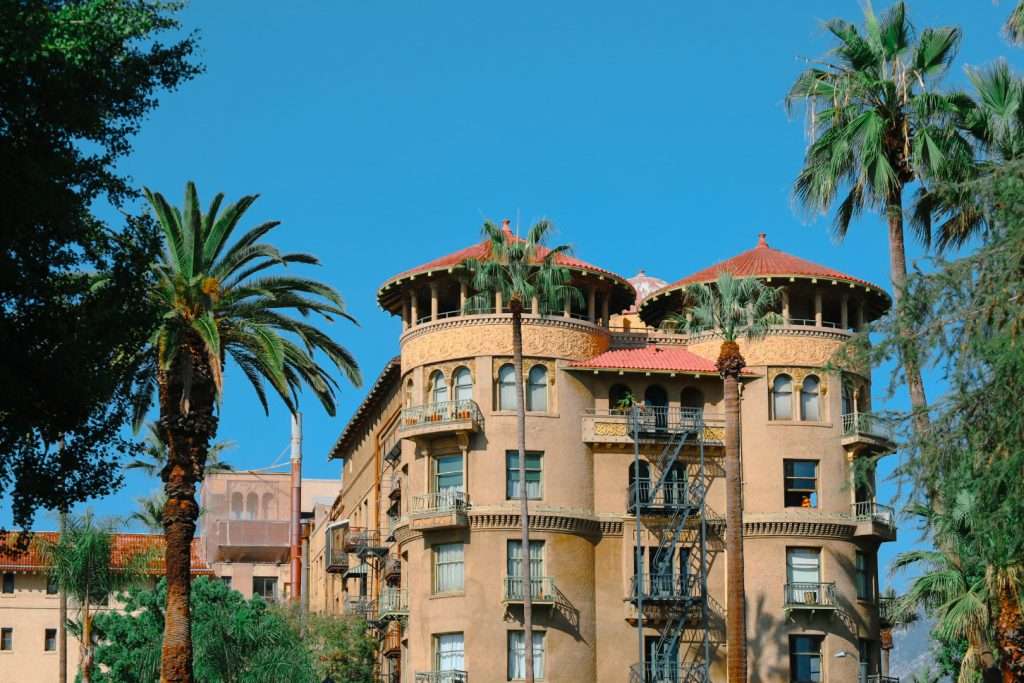
The Hotel Green was the place to be in Pasadena during the resort area. Hotel Green hosted everyone from wealthy tycoons to presidents. It was also the site’s original home of the Tournament of Roses and the Valley Hunt Club. When the resort era ended, a group of regular guests banded together to keep the Hotel Green alive. In 1924, they divided the hotel into three parts. Hotel Green’s Central Annex was split into fifty individually owned units and was renamed Castle Green.
Pasadena’s Memorial Park
Pasadena’s Memorial Park is a five-acre park along Raymond Ave. Originally known as Library Park, this area was the home of Pasadena’s first library, a distinguished stone Romanesque building created in 1890. Spanning five acres, Memorial Park was developed in 1902 alongside the nearby Central Park (across from Castle Green).
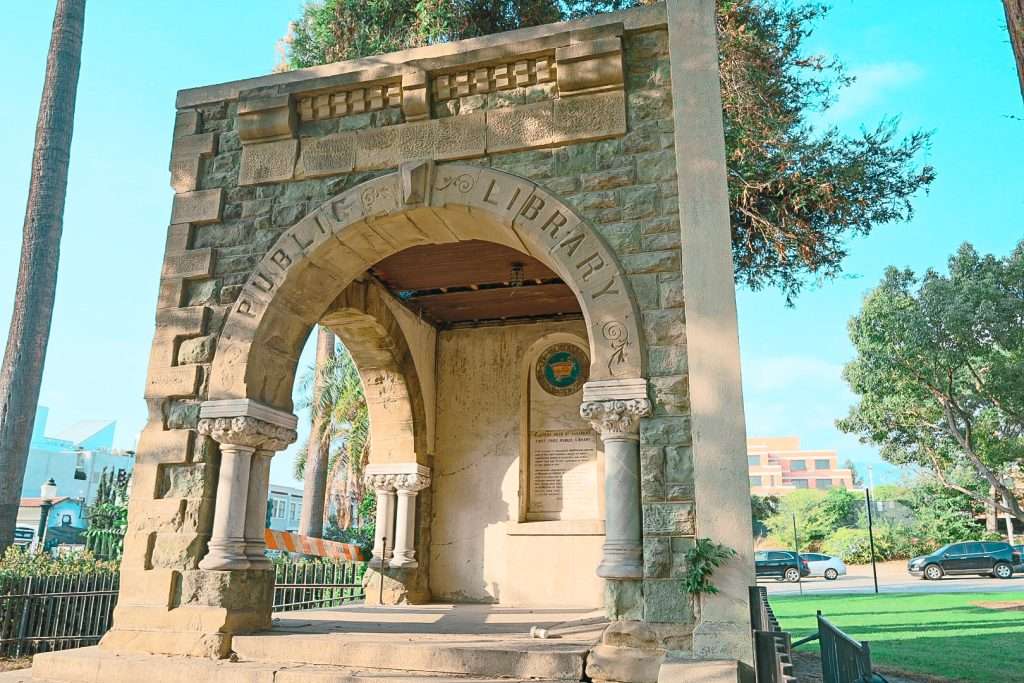
In 1906, a Civil War monument was added to Memorial Park, commemorated on Memorial Day. Memorial Park was once home to Pasadena’s Central Library, but it was damaged by an earthquake in 1933 and dismantled in 1954. However, the Pasadena Library’s original entrance arch was preserved and still stands at the northwest corner of Memorial Park.
Next to Memorial Park is Metro’s Memorial Park Station. The Metro Gold Line runs along the same route as the original Santa Fe Railroad.
In recent years, Memorial Park has become a place for music concerts and community events.
Memorial Park is an important part of Pasadena’s history. In 1983, the park was listed in the National Register of Historic Places as part of the Civic Center Historic District.
Pasadena’s Central Park
Central Park, the first public park in Pasadena, is a historic landmark. Located at 275 S. Raymond Ave, Central Park opened in 1902 as the backyard of the Hotel Green. Central Park quickly became a popular destination for tourists staying at Hotel Green and other nearby hotels.

Central Park was a popular place for easterners visiting Pasadena. Central Park had a bandstand and an aviary that drew visitors from all over the U.S. Today, some of Central Park’s original amenities remain, including a crochet field, a lawn bowling court, and a clubhouse.
Central Park is an important part of Pasadena, serving as a gathering spot for the City of Pasadena’s ‘movies in the park’, artisan fairs, and community events.
Pasadena’s Del Mar Metro Station
Pasadena’s Del Mar Station, located at 230 S. Raymond Ave, is a historic landmark in Pasadena that serves Metro’s Gold Line. The station incorporates the old Santa Fe Station, a mission-style building constructed in 1930 that serviced the Atchison, Topeka, and Santa Fe Railway (and later Amtrak) until 1994.
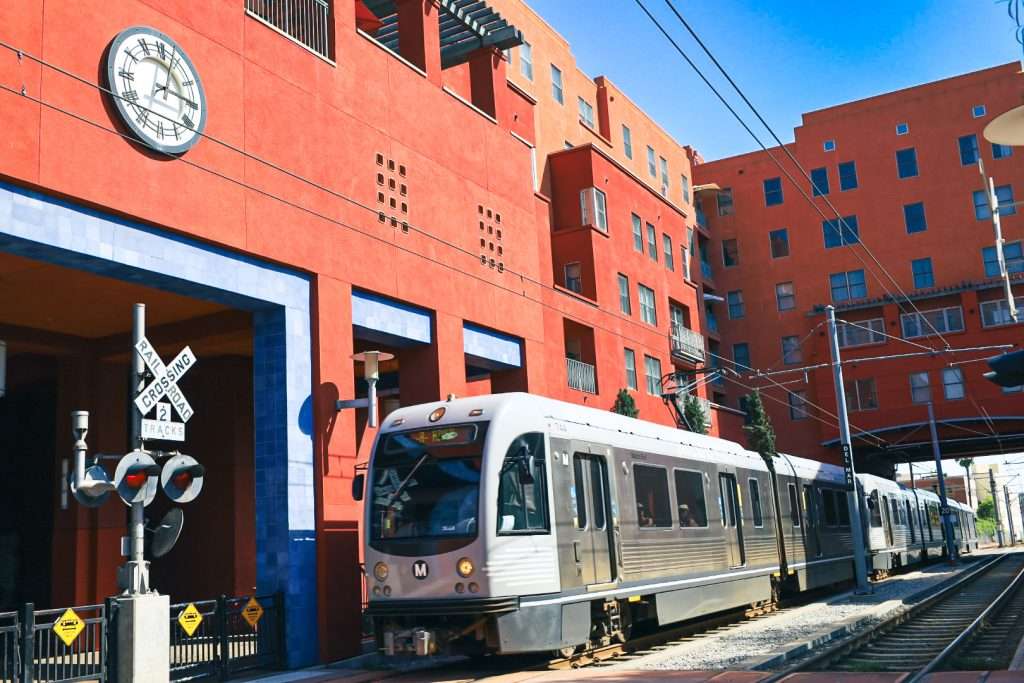
Del Mar Station is close to several restaurants. The original train station waiting room and adjacent luggage room are a part of La Grand Orange restaurant. In the past, the Del Mar station was home to the Super Chief, the ultimate luxury train.
Pasadena’s Del Mar Station was known as the “Gateway to Hollywood,” as many celebrities boarded and unboarded here to avoid the media at Los Angeles’ Union Station.
Pasadena’s Raymond Theater

The Raymond Theater, located at 129 N. Raymond Ave was built in 1920. Designed by Cyril Bennett, this Beaux Arts style theater was one of the most popular theaters in Southern California during the 1920s. The Raymond Theater was large; it had 2000 seats and hosted the top rock bands and artists.
In 1948, the Raymond Theater was sold and reopened as the Crown Theatre, still serving as Pasadena’s premier movie house until the 1970s, when it became a concert venue (Perkins Palace). Known as Perkins Palace, the auditorium showcased some of the most famous new wave and punk bands in the 1980s, including Adam and the Ants, the Cure, New Order, and the Plasmatics.
In 2009, the Raymond Theater’s interior was transformed into condominiums, offices, and retail space.
Pasadena’s Armory for the Arts
Pasadena’s Armory for the Arts is located in a historic building on Raymond Ave in Pasadena. The Armory for the Arts was built in 1932 as a National Guard Armory.
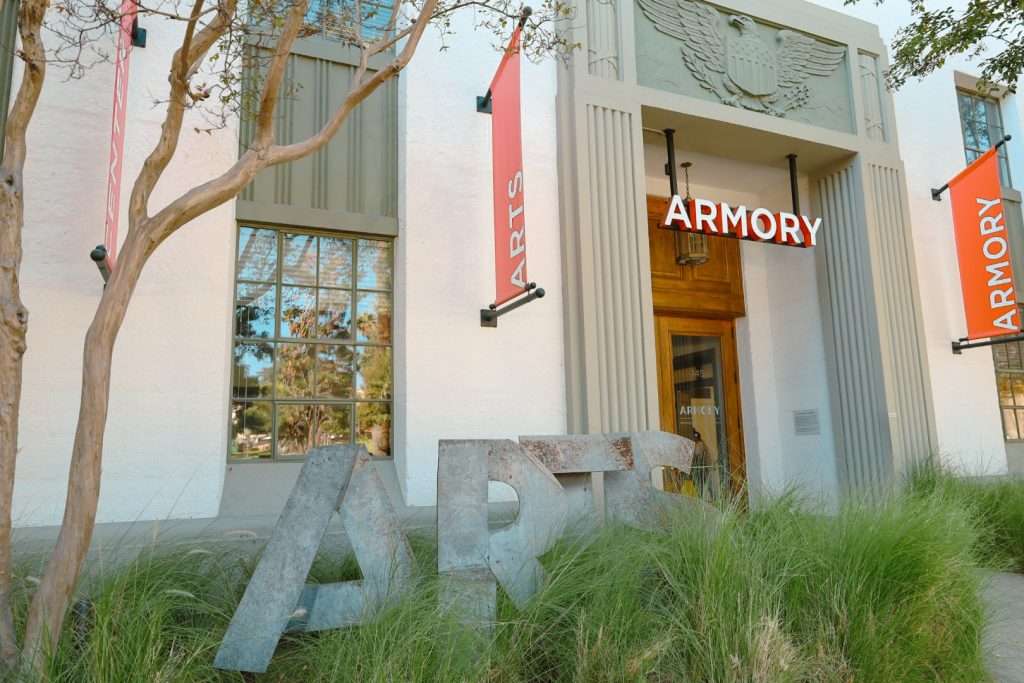
The Pasadena Armory building became the home of the education department of the Pasadena Art Museum in 1947. Local artists led art classes at the Armory. This education program became known as the Pasadena Art Workshops. After neglect, the Pasadena Armory building fell into disrepair and was eventually abandoned.
In the 1980s, artists and community members came together to save the building and transform it into a community arts center. They raised funds to restore the historic building and opened the Armory for the Arts in 1989. Today, the Armory for the Arts is a vibrant hub of artistic activity, offering classes to children and adults, art exhibitions highlighting local artists, and performances for people of all ages and skill levels.
The Pasadena Armory is usually one of the art spaces open for free on Pasadena’s Art Night.
Pasadena’s Raymond Ave
If you’re interested in living in a historical area of Pasadena, consider the apartments and condos on Raymond Ave. Raymond Ave is home to many historic landmarks and buildings that date back to the early 1900s.

