

Did you know that over 90% of Pasadena’s Playhouse Village visitors cite public art as a key attraction?
This Pasadena neighborhood enriches the local cultural scene and draws thousands of tourists and new residents each year, eager to explore its unique murals, innovative crosswalk art, and playful sculptures.
Architectural Significance and Historic Buildings
The architectural landscape of the Playhouse District is a key element of its charm and historical importance. Each building tells a story, contributing layers of historical context to the vibrant cultural life of the area.
Important Buildings in the Pasadena Playhouse District
The Pasadena Playhouse
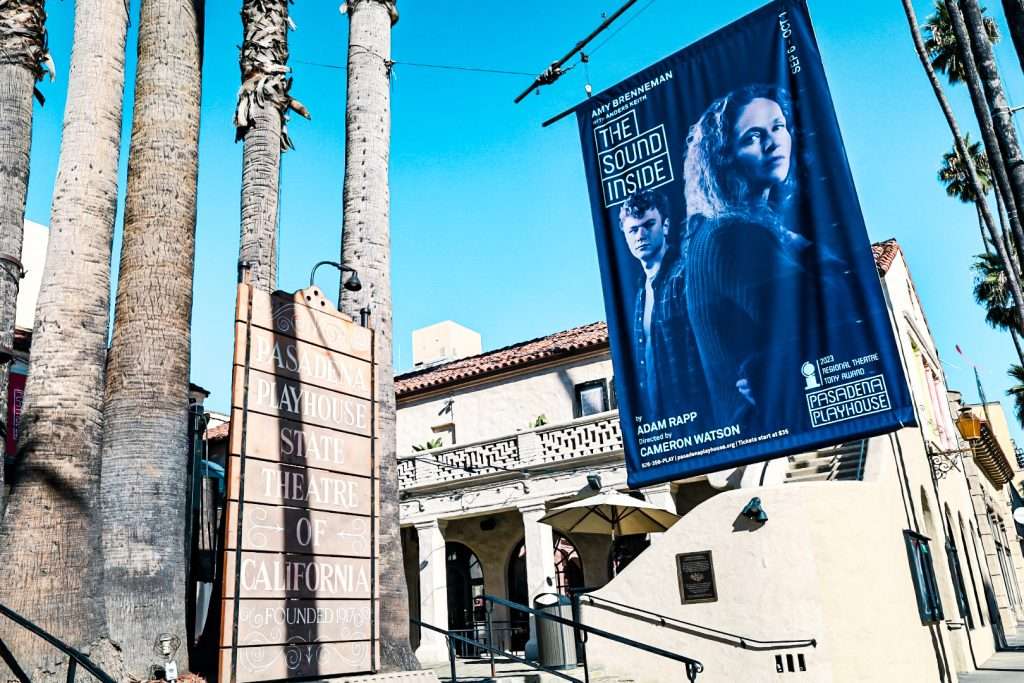
The Pasadena Playhouse, officially recognized as the State Theatre of California, is a prominent cultural landmark in Pasadena’s Playhouse District. Constructed in 1924, this historical building was designed by architect Elmer Grey in the Spanish Colonial Revival style. It features a beautiful facade and intricately detailed interior that underscore its significance in the area.
Main Stage (Pasadena Playhouse)
- Seating Capacity: Approximately 686 seats.
- Features: This is the primary performance space at the Pasadena Playhouse, known for hosting a wide range of productions, including classical plays, modern pieces, and world premieres.
- Design: Features elaborate architectural details in a Spanish Colonial Revival style, contributing to an enriching viewing experience.
- Uses: Serves as the central stage for major theatrical productions and is a focal point of the Playhouse’s programming.
Carrie Hamilton Theatre
- Seating Capacity: Smaller, more intimate space compared to the main stage.
- Features: Named after actress Carrie Hamilton, daughter of Carol Burnett, this theater offers a flexible space for experimental and smaller-scale productions.
- Uses: Hosts experimental plays, readings, workshops, and other community-focused events, allowing for more innovative and experimental theatrical expressions.
Target
Don’t forget to take a selfie in front of Target on Pasadena’s stretch of the historic Route 66. This building originally opened in 1958 as J. W. Robinson Co.’s 4th department store. Its mid-century modern architecture, crafted by William L. Pereira and Charles Luckman, boasts minimalist elements like terrazzo panels and painted brick—ideal for a standout photo backdrop.
Brick Buildings
In addition to these critical landmarks, the Pasadena Playhouse District also features brick buildings built decades ago. These brick structures, often characterized by their sturdy construction and classic aesthetic, add a textural richness to the streetscape and embody the architectural trends of the early 20th century.
Brick buildings serve as venues for various businesses, from quaint bookstores to modern eateries, infusing historical charm into everyday experiences.
Public Art: Sculptures and Displays
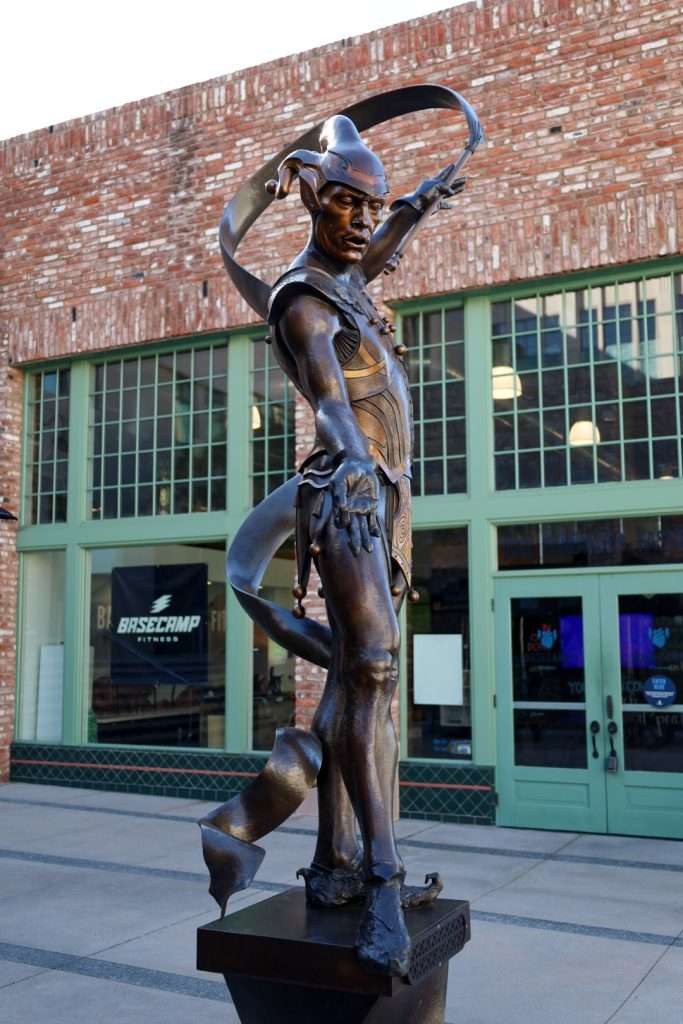
Public art in the Playhouse District plays a vital role in shaping the neighborhood’s identity and fostering a vibrant community atmosphere. These artworks enhance the area’s aesthetic appeal and stimulate cultural conversation and community engagement.
List of Public Art Sculptures and Displays
The Playhouse Playhouse District is a vibrant arts district with a rich public art collection. Here’s a detailed list of the art, sculptures, murals, and other creative installations that you can explore in this area:
Murals
- Playhouse Village Mural Program
- A series of curated outdoor murals by both local and nationally recognized artists, in partnership with Beautify Earth, are located at key locations throughout Playhouse Village, enhancing the visual landscape of the area.
- Artists and Specific Murals
- Trek Kelly’s “Bee Kind” – Located on Green Street by Jacob Maarse Florists and Gifts.
- Spencer MAR Guilburt’s “Untitled” – Found on Green Street by Kornrandolph.
- Gino Flo’s “Inspiration Blvd” – Situated between Laemmle Playhouse 7 and The Andalucia.
- Evan Meyer’s “Sofia” – Positioned at 250 N. Lake Ave.
- Reef Kills’ “Artemis” – Near Vroman’s Bookstore.
Crosswalk Art
- Pedestrian Street Art: This is the first program of its kind in Pasadena, installed at various crosswalks in Playhouse Village.
- Locations Include:
- Colorado and Hudson, Madison, Oak Knoll
- Los Robles and Green
- Union and El Molino, Mentor, Oakland
- Walnut and Oakland
- Designs:
- Created by Cynthia Luna, featuring patterns inspired by Pasadena’s trees, architecture, and the Rose Parade.
- “River Migration” by Hataya Tubtim at Walnut and Oakland, Union and Mentor, Madison and Green.
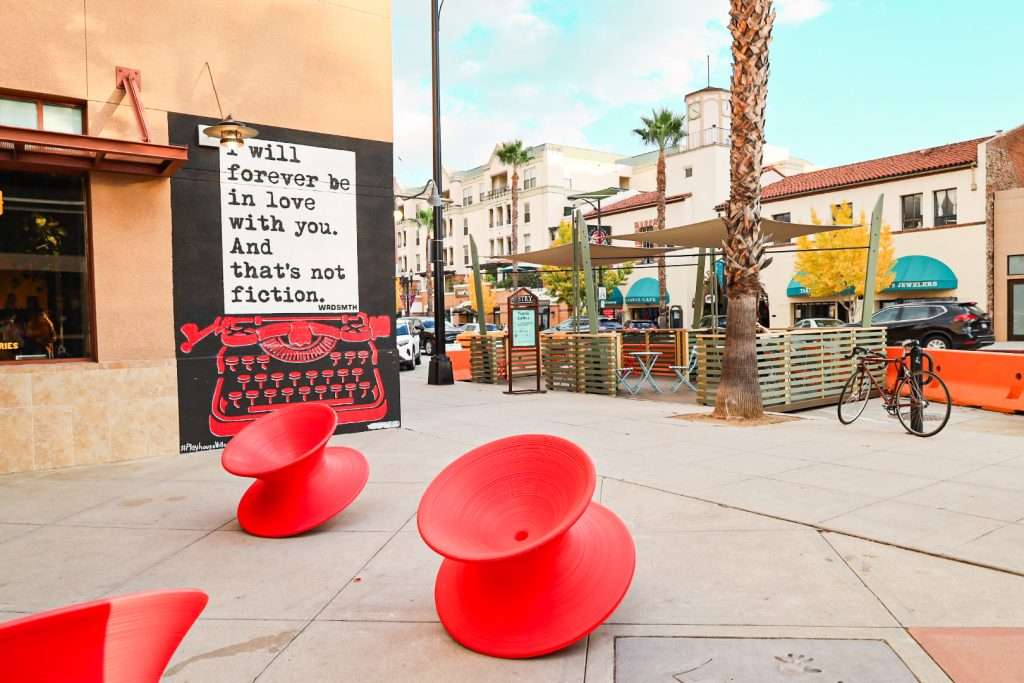
Spun Chairs
- Designed by Thomas Heatherwick, these unique red Spun Chairs are playful sculptures and functional furniture. They allow users to rock side-to-side or spin around. Located around Playhouse Village, they offer a fun and interactive experience.
Utility Box Art
- Susan Silton’s “Utility II” (2016): Located along Colorado Boulevard at the southeast corners of Los Robles, Oakland, Madison, El Molino, and Oak Knoll. This installation focuses on freedom of speech crusaders.
- Alicia Gorecki’s Designs:
- “Imagination = Utility” at Union and Oak Knoll (near Target Pasadena) – Celebrates imagination with vibrant and whimsical imagery.
- “Education History = Utility” at Los Robles and Walnut – Reflects on the value of education with historical references.
- “Epiphanies in Pasadena” by John David O’Brien and Molly Bendall at Union at Oakland and Los Robles – Offers dreamy designs that encourage public contemplation.
Importance of Art in the Playhouse District
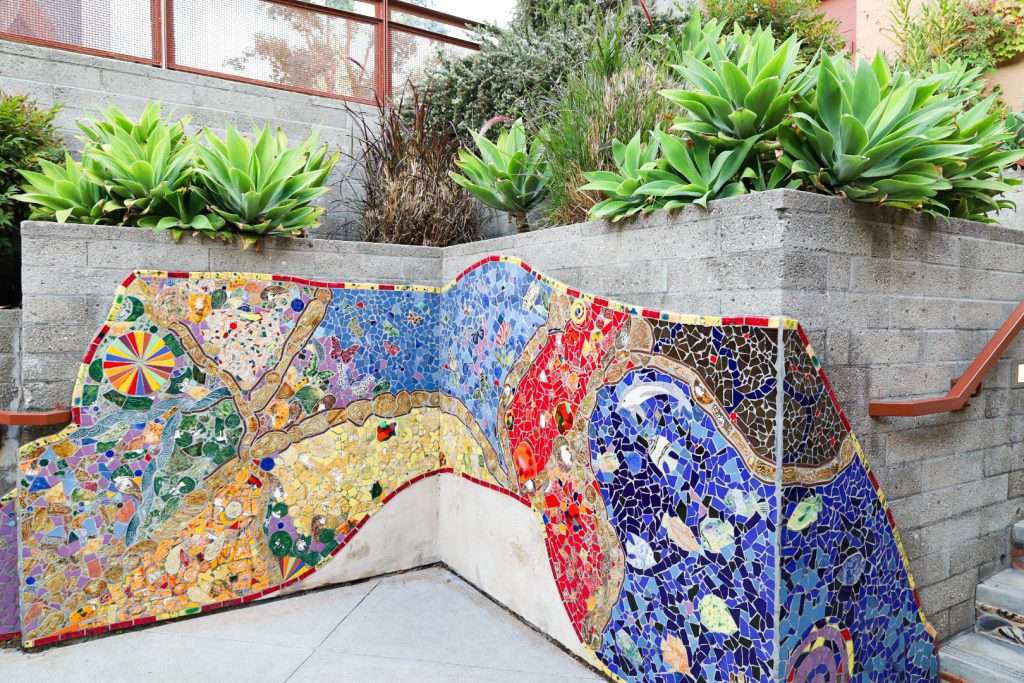
Art in the Playhouse District is crucial for several reasons:
- Community Identity: The art displayed throughout the neighborhood helps define and express the district’s unique character.
- Cultural Engagement: Public art provides an accessible way for people to engage with culture, offering spontaneous interactions with creative expressions that enrich daily life.
- Economic Vitality: Art attracts visitors and locals alike, supporting local businesses and contributing to the economic health of the area.

Pasadena’s Playhouse District
The Playhouse District of Pasadena is more than just a neighborhood; it celebrates history, art, and architecture. Its meticulously preserved buildings and vibrant public art installations create a unique cultural environment where history and modernity coexist beautifully.
For residents and visitors, the district offers a rich tapestry of experiences highlighting the importance of preserving cultural heritage while actively engaging with the contemporary world. Through its historical edifices and public artworks, the Playhouse District remains a pivotal area in Pasadena, cherished for its past and pulsating present. Whether you’re drawn by its architectural beauty, historical significance, or artistic vibrancy, the Playhouse District invites all to explore and enjoy its many offerings.

