

Pasadena, California is known for its rich history and architecture. While many people may flock to the popular museums, hikes in the San Gabriel Mountains, or the Lower Arroyo to practice archery, there is a world of hidden treasures tucked away in Pasadena’s downtown alleys.
In this blog post, we will take you on a virtual tour of some of Pasadena’s most interesting and historically significant alleys.
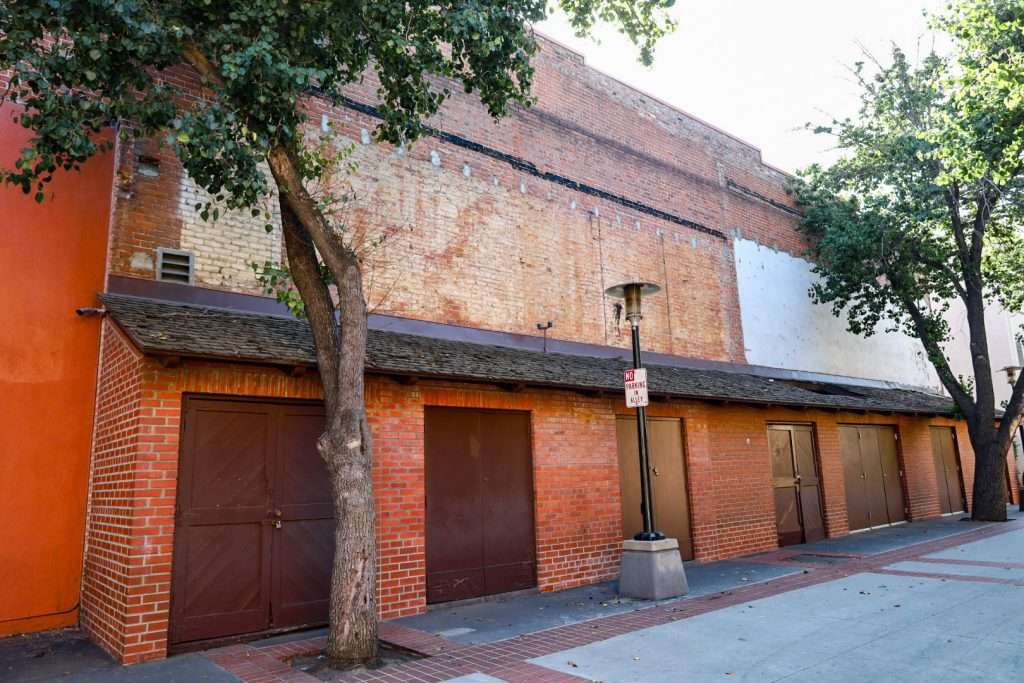
Downtown Pasadena Alleys
Each alley, named after iconic personalities and significant establishments, offers a glimpse into the city’s rich past.
Downtown Pasadena Alleys Named after Business Personalities and Real Estate Magnates

- Hugus Alley: John W. Hugus, a philanthropist and rancher, co-owned the Hugus and Bonham Block. Pasadena’s Hugus Alley is part of One Colorado and is the site of Halloween events, Christmas events, Summer concerts, Valentine’s Day events, and the Summer Silent Movie series.
- Kendall Alley: In the heart of Pasadena, Bela Otis Kendall established a thriving real estate empire, leaving behind important architectural buildings like the Kinney-Kendall building and the Seymour Locke-designed auditorium.
- McCormick Alley: E.L. McCormick was the President of the American Bank & Trust Company. The remnants of the bank, after the widening of Colorado and Broadway Streets, became part of the F.C. Nash & Company Department Store Building.
- Martin Alley: Named after T.E. Martin, the builder of The Webster Hotel in 1884. The hotel was located a the corner of Colorado Boulevard and Fair Oaks Avenue. Later renamed The Grand Hotel, it stood as a central hub for numerous social gatherings during Pasadena’s formative years.
- Plotkin Alley: James Plotkin, often referred to as the “Unofficial Mayor of Old Pasadena,” played a pivotal role in revitalizing Old Pasadena, fostering community growth and connection.
- Smith Alley: Named after Willis H. Smith, an entrepreneur who started a harness and saddlery business in 1896 in Pasadena. His saddles and harnesses were known for their straightforward design and quality. Smith’s primary clientele were wealthy Pasadena families and businesses, including the prestigious Raymond Hotel. Smith also co-founded the Troy Laundry in 1898, one of Pasadena’s earliest commercial laundries.

Downtown Pasadena Alleys named after Banking and Financial Institutions:
- Fraser Alley: Dr. Fraser was a respected physician of the esteemed Raymond Hotel in the 1890s. He was also the President of the First National Bank of Pasadena. Interestingly, the bank’s humble beginnings started in a room on Raymond Avenue. Not long after, the bank moved the Masonic Temple, the building on the southeast corner of Raymond Avenue and Colorado Street.
- Exchange Alley: Named after the “Exchange Block Building” at 13-27 East Colorado Boulevard, its most prominent establishment was the Carlton Hotel, a premier business hotel set up in 1886. The ground floor housed the Harper & Reynolds Hardware Company and the renowned Alexander Cruikshank’s Dry Goods Store, later dubbed “The Bon Accord.”
Downtown Pasadena Alleys named after Historic Infrastructure and Railways:
- Pacific Alley: Pacific Alley is named after the Pacific Electric Railway Company, reflecting its historical significance to the region. The railway, with its extensive network covering over 1,100 miles, was the largest electric railway system in the world at its zenith. Serving multiple communities, it played a pivotal role in shaping the transportation landscape of Southern California during the early 20th century.
- Electric Alley: Electric Alley highlights the technological advances introduced by the Pacific Electric Railway Company. The electric railway system represented a significant leap in transportation methods of its time, offering faster and more efficient means of travel compared to traditional systems.
Downtown Pasadena Alleys Recognizing Founders, Early Settlers, and Community Contributors:

- Bonham Alley: Named after Perry P. Bonham, a prominent plumber and city official in the early 1900s. Bonham was a police commissioner from 1901-1902. He also served on the Board of Trade, the precursor to the current Chamber of Commerce, in 1904. Pasadena’s Bonham alley features late 19th-century masonry buildings tucked behind a Spanish Colonial facade, showcasing a piece of Pasadena’s architectural heritage.
- Mills Place: Dedicated to Alexander Fraser Mills. Mills was a nurseryman by profession. His nursery was a vital gathering spot for early Pasadenans, transforming it into a social hub where town news and stories were shared.
- Baker Alley: Baker was a visionary who actively participated in the establishment of educational institutions and community centers. His vision was to make Pasadena a thriving community.
- Edwin Alley: General Edwin Ward’s name is etched in Pasadena’s history. While many remember him for his significant investments in real estate, Ward’s true legacy lies in his initiatives that modernized Pasadena. He helped bring in new infrastructure and amenities, propelling Pasadena into the 20th century and making it a sought-after destination for both residents and businesses.
- Brainaird Alley: J.C. Brainard helped establish Prospect Park, one of Pasadena’s initial upscale residential subdivisions. J.C. Brainard was the first President of the Pasadena Board of Realtors in 1908. He also helped the Home Telephone & Telegraph Company become Pasadena’s sole residential telephone service provider by 1912.
- Hopkins Alley: Casper T. Hopkins was a strong advocate for the creation of a Public Library. In 1880, he acquired the prominent eighty-acre “Olivewood Tract” along Colorado Boulevard.
- Legge Alley: Legge Alley stands as a tribute to Charles Legge, a prominent real estate figure who moved to Pasadena from Iowa in 1875. He donated land for Pasadena’s First Public Library, established in Memorial Park in 1887. Legge was also a director of the First National Bank of Pasadena, which was located at the northwest corner of Colorado Boulevard and Fair Oaks Avenue. Legge’s developed brick buildings on North Raymond Avenue between Union and Holly Streets.
Downtown Pasadena’s alleys named after Retail and Business Centers:
- Mercantile Place: A nod to the retail heart of Pasadena. This alley alley was a service road for prominent retail merchants on Colorado Boulevard. Key establishments included Hertel’s Dry Goods, J.W. Woods’ pharmacy, Conrad & Hotaling’s men’s wear, and A.C. Vroman’s inaugural bookshop in 1894. This block also hosted the Valley Union Newspaper Offices and a variety of shops, from grocers to jewelers.
- Christensen Alley: Named after the Christensen family, who established the Penn Oil and Supply Company in 1903 and became the West Coast’s first independent Firestone and Union Oil Dealership. By the early 1930s, G.C. Christensen launched a state-of-the-art automotive service facility at 100 West Union Street, a structure conceived by J. Cyril Bennett, a notable Pasadena architect with several renowned local designs to his name.
Other Alleys in Downtown Pasadena:

- Hayes Alley: Orrin Henry Hayes, an essential figure in Pasadena’s early trade ecosystem, set up one of the community’s earliest business enterprises.
- Miller Alley: Named after Lester F. Miller, who arrived in Pasadena in 1884 seeking better health in Pasadena’s mild climate. Miller transitioned into real estate, expertly subdividing homesites, ranches, and orange groves to cater to Pasadena’s new families. Miller was a founding member of the First Baptist Church.
Each alley in Downtown Pasadena is connected to Pasadena’s history, with tales of visionaries, pioneers, and everyday heroes. The next time you find yourself in downtown Pasadena, take a moment to appreciate the historical significance of these alleys.

