
Pasadena’s brick buildings make up over 40% of the city’s historical structures, significantly higher than in many other Californian cities. Pasadena embraces brick as a defining element of its architectural identity, weaving a tale of resilience, style, and history that enhances the city’s modern appeal.
Why Brick Buildings?
Pasadena’s growth into a cultural and economic hub of Southern California began in the late 19th and early 20th centuries. During this period, brick emerged as a preferred building material, celebrated for its durability and superior fire resistance—a significant advantage in a region prone to frequent wildfires.
Pasadena’s usage of brick was also shaped by several key events and local ordinances implemented in response to major fires and the seismic activity common to California.

The Role of Brick Buildings in Modern Pasadena
In Pasadena, a conscious effort is to maintain and repurpose historic brick buildings, recognizing them as vital links to the city’s history. Brick buildings add an irreplaceable charm to Pasadena’s cityscape, with many retaining their original façades and signage, allowing them to serve as both functional parts of the urban environment and as historical artifacts.
Pasadena’s Brick Hotels
- Castle Green: Once part of the wealthy Hotel Green, Castle Green has been transformed into one of Pasadena’s most coveted residential addresses, its original architectural elegance still very much intact.
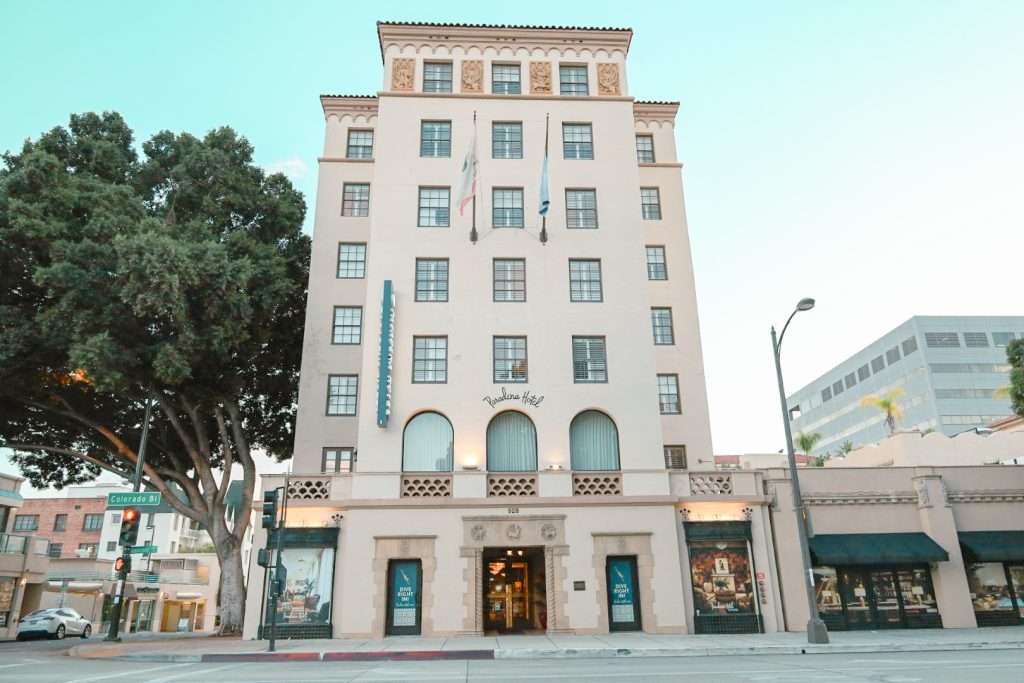
- Pasadena Hotel (Previously Constance Hotel) pictured above: This hotel, originally built in 1926 is now a contemporary boutique hotel, melding modern luxury with historical ambiance while preserving its historic brick façade and original signage.
Many brick buildings left intact
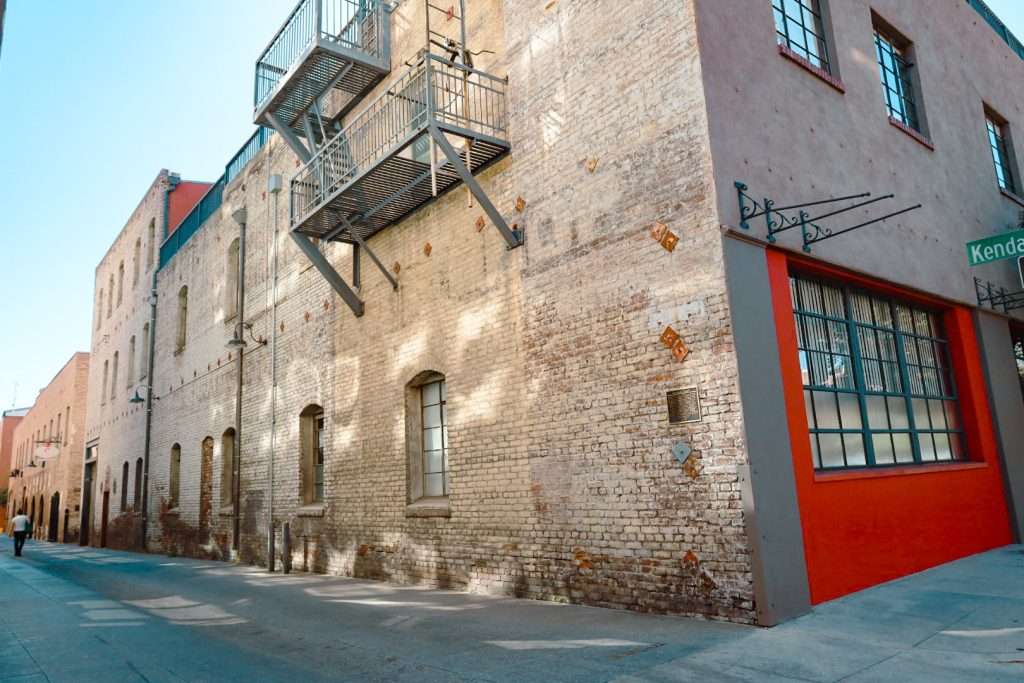
Across Pasadena, many brick buildings feature preserved architectural elements such as original brick facades, wooden beams, and historical signage. These elements enhance the aesthetic appeal of these structures and serve as visual storytellers of the city’s layered history. In Old Pasadena, for instance, it’s not uncommon to see contemporary retail spaces adorned with old painted advertisements, a nod to their storied pasts.
Our Favorite Brick Buildings in Pasadena
Downtown (Old )Pasadena
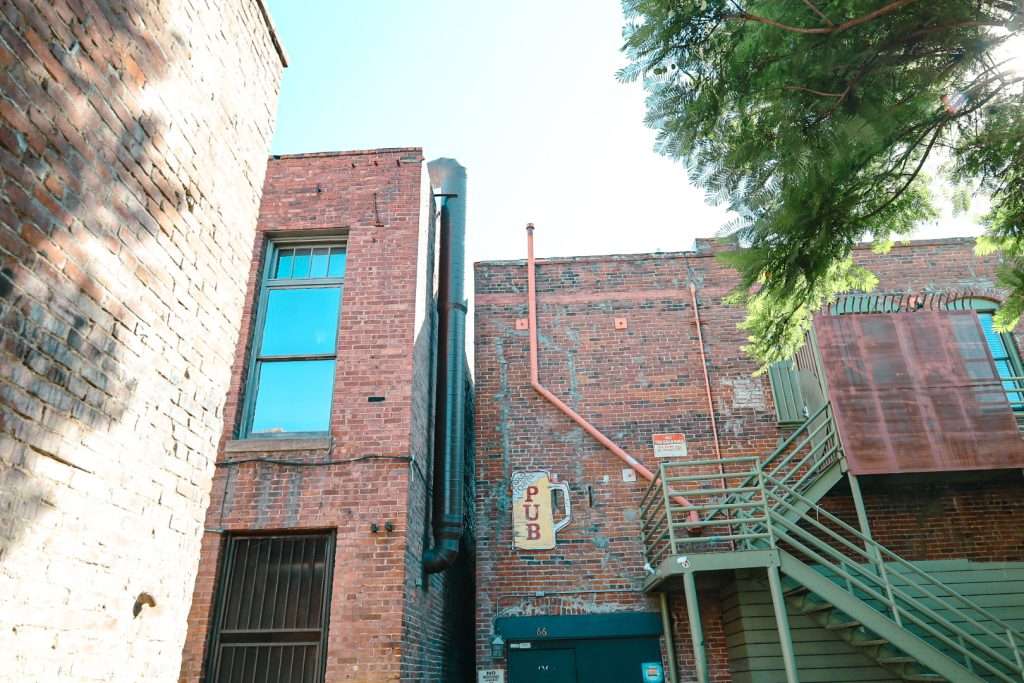
Old Pasadena’s brick buildings and unique alleyways are home to a unique mix of restaurants, coffee shops, bars, and retail stores. The adaptive reuse of these spaces preserves the architectural heritage but also adds a dynamic and trendy layer to Pasadena’s social and cultural scene.
- Castle Green – Originally part of the Hotel Green, a turn-of-the-century resort hotel.
- Pasadena Central Library – The first public library in Pasadena. Part of the original brick structure is in Central Park.
- YMCA Building – The historic YMCA has now been converted for residential use.
- Pasadena Hotel (Previously Constance Hotel) – Originally built in 1926, Pasadena Hotel is now a luxury boutique hotel.
- Old Pasadena Historic District – Numerous brick buildings along Colorado Boulevard.
- Boston Centennial Building—This historic building on Raymond Ave offers New York-style living in Old Town Pasadena. This original brick structure, built in 1905, showcases the elegant Italian Renaissance Revival style.
- St. Andrew Catholic Church – This historic brick church was founded in 1886, but the current building was constructed later, in 1927. It’s designed in the Romanesque Revival style.
- Kinney-Kendall Building: This three-story brick structure, designed by the acclaimed architects Charles and Henry Greene, is located at the northwest corner of Colorado Boulevard and Raymond Avenue.
- Auditorium Building: This two-story brick building, crafted by Seymour Locke, sits at the northwest corner of Union Street and Raymond Avenue.
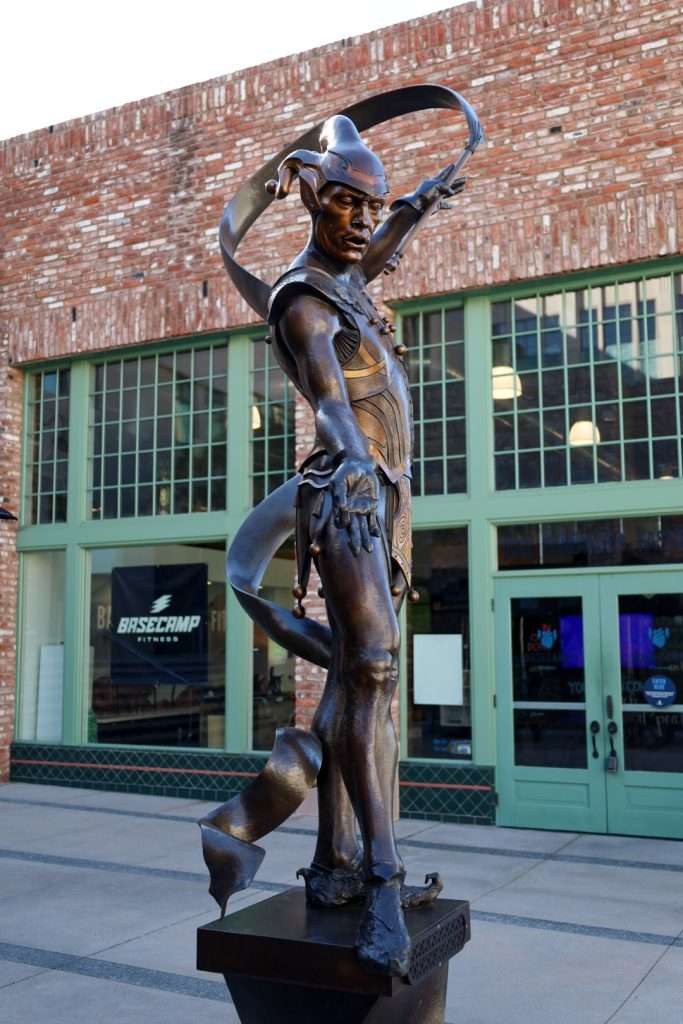
Brick buildings are spread across Pasadena. Another one of our favorites sits directly behind this sculpture across from the Pasadena Playhouse.